Monday, April 30, 2007

The Livehood


The Livehood

Although the industrial sector of the economy is gradually gaining importance as a result of conscientious government policies, Indonesia is still predominantly agrarian. Major agricultural products for domestic consumption and export include rice, corn, cassava, soybeans, timber, rubber, palm oil and various spices for which it has for centuries been famed. Indonesian agronomists, in cooperation with the International Rice Institute based in the Philippines, are continuously developing new rice varieties suitable for growing under particular conditions prevailing in the various regions of Indonesia.
The government has since 1968 been actively involved in providing guidance to peasants under the BIMAS mass guidance programme, with considerable results.
Similar progress has been made in the field of fishery. Shrimp has become a major foreign exchange earner. To support the growing shrimp culture, a Shrimp Research Centre has been set up in Jepara (Central Java) with UNDP assistance.

Under government guidance, fish production in the Indonesian waters is estimated to have increased at a rate of 5.4% annually. Snail production is also growing as an export item to countries in Europe where it is considered a delicacy, like in France, Estates play an important role within the context of agricultural development, as their total area covers approximately 6,6 million hectares of which 83,7% are smallholders.
Tobacco planting has been intensified in several areas, the largest estates being in East Java where they cover a total area of 1,000 hectares. Tea is continuously being cultivated.
The rejuvenation of coconut plantations proceeds in order to regain Indonesia's prominent pre World War II position in the export of this crop. Rejuvenating rubber estates the majority of which are located in Sumatra, is also being encouraged.

Development in the field of palm-oil has resulted in steadyincrease in output, i.e. a round 15% annually. Indonesia's first cotton growing company was set up in 1978 in South Sulawesi to answer Indonesia's present need for around 350,000 bales annually for its qrowing textile industry.

Wayang Puppet Theatre


Wayang Puppet Theatre in Indonesia


UNESCO proclaimed the Wayang Puppet Theatre as a Masterpiece of Oral and Intangible Heritage of Humanity on 7th November 2003. It was proclaimed, with 28 other masterpiece around the world, enhancing the first list of 19 cultural spaces and expressions selected in May 2001. The Proclamation of Masterpiece of the Oral and Intangible Heritage of Humanity programme was created in 1997 at the 29th session of the General Conference of UNESCO.

Wayang is an ancient form of story telling originated on the Indonesian island of Java. For ten centuries wayang flourished at the royal courts of Java and Bali as well as in rural areas. Today, wayang is practiced not only on Java and Bali, but also on the islands of Lombok, Madura, Sumatra and Borneo, where various local performance styles and musical accompaniments have developed.

Traditionally, Wayang performances took place not only in the courts of kings and noblemen, but also in the compounds of temples or of private families, in village squares and even in theatres. Wayang performers, the dalangs, musicians and singers performed for whoever wished to invite them. Today, as the pressures of modern, urban society are contributing to a disintegration of community and family life, the traditional family rituals which would have included Wayang, are celebrated less frequently, and less elaborately.

In the past, puppeteers were regarded as cultivated literary experts who transmitted philosophical, moral and aesthetic values through their art. The words and actions of comic characters representing the �common man� have provided an acceptable vehicle for criticizing sensitive social and political issues, and it is believed that this special role may have contributed to wayang�s survival over the centuries.

In October 2004, responding to the urgent need to safeguard the traditional Wayang Puppet Theatre, UNESCO proposed a project entitled "Implementation of the First Phase of the National Action Plan for the Safeguarding of the Wayang Puppet Theatre of Indonesia, a UNESCO Masterpiece of the Oral and Intangible Cultural Heritage of Humanity".

The objective is to encourage Indonesia to undertake concrete action to safeguard, revitalize, and promote this traditional puppet theatre. Over its 3-year duration, the project will focus on the three main activities, Research & Documentation, Training, and Dissemination. Japanese Funds-in-Trust supports the project for the Preservation and Promotion of Intangible Cultural Heritage. The Intangible Heritage Section (ITH) at UNESCO Headquarters, SENA WANGI (the national implementing agency) and UNESCO Office Jakarta are all involved in its implementation.

SENAWANGI, the national implementing agency, is working together with PEPADI (Indonesian Pedalangan Union), private Wayang training centres (PDM & Habirando), STSI (Indonesian Arts University), and ISI (Indonesian Arts Institute). They will establish sanggars in Palembang and Banjarmasin, in order to make inventories and update documentations on sanggars and Wayang practitioners of the five kinds of Wayang such as Wayang Kulit Purwa Surakarta, Wayang Kulit Purwa Yogyakarta, Wayang Kulit Parwa Bali, Wayang Kulit Malangan, Wayang Golek Sunda, Wayang Kulit Banjar and Wayang Kulit Palembang.

SENAWANGI will continue conducting field research and surveys in close cooperation with PEPADI by visiting selected locations such as: Denpasar, Malang, Surakarta, Yogyakarta, Bandung, Sukabumi, Karawang, Jakarta, Palembang and Banjarmasin. As well as inviting the wayang master practitioners and experts from each location to assist in taking inventories and to update documentation on sanggars and wayang practitioners for the five kinds of Wayang.

More information of the Masterpiece of Oral and Intangible Heritage of Humanity on First Proclamation, Second Proclamation and Third Proclamation.
For more information regarding activities on wayang www.wayang-indonesia.com.

Stone-expert Mission in Borobudur World Heritage Site

In consultation with the Department of Culture and Tourism of the Republic of Indonesia and the World Heritage Centre, a technical mission was organized on Borobudur World Heritage Site from 27 September to 7 October 2006. Italian stone-expert Prof. Costantino Meucci inspected the site in collaboration with the team of conservationists from the Borobudur Heritage Conservation Institute.

Despite the great efforts made over the years for the conservation of the stones, the monitoring programme conducted by the Borobudur Heritage Conservation Institute has shown that the rate of material deterioration of the stone continues to increase, especially as far as scaling is concerned (but also alveolization and cementation). Even if a large part of this deterioration of the stone is natural and cannot be stopped, it seems that it could be reduced by more adapted maintenance practices and treatments on the site.

The Mission hence aimed at reviewing the current methodology of stone conservation at Borobudur Complex and designing new activities for monitoring and research. Prof. Costantino Meucci observed the deterioration of the stones onsite and had the opportunity to analyse samples in the laboratories of the Borobudur Heritage Conservation Institute.

During his mission, Prof. Meucci also inspected recently earthquake-affected Prambanan World Heritage Compounds and Taman Sari Water Castle in Yogyakarta and gave advice to the local authorities for the emergency protection and rehabilitation of these sites.

UNESCO has been actively involved in safeguarding the Borobudur World Heritage Site since 1973. Inscribed on the World Heritage List in 1991, Borobudur is one of seven World Heritage Sites in Indonesia. It is our duty to continue to raise international awareness, not only to preserve this outstanding masterpiece and to treasure it for future generations to come, but also to do it justice, by teaching others to appreciate and understand its significance and artistic beauty.

Interdisciplinary research in Prambanan

Interdisciplinary research in Prambanan World Heritage Compounds and Taman Sari Water Castle in Yogyakarta.

(Date: February 6, 2007)

Within the framework of the project entitled “Protection and Rehabilitation of Cultural Heritage in the Earthquake-affected areas of the Special Province of Yogyakarta and the Province of Central Java” funded by the Kingdom of Saudi Arabia, UNESCO Office, Jakarta in close collaboration with the Department of Culture and Tourism, is currently implementing two major interdisciplinary research programmes in Prambanan World Heritage Compounds (including Lumbung and Sewu Temples) and Taman Sari Water Castle, which have been affected by the 27 May 2006 earthquake in the region. The aim of the research, which involves archeologists, civil engineers, architects, geologists and other experts from Indonesia, is to assist the Government of Indonesia in the safeguarding of cultural heritage of Yogyakarta and Central Java affected by the earthquake, especially by identifying the deep causes of the damages and by giving technical recommendations to address them for the long-term rehabilitation efforts. This comprehensive research programme that started in December 2006 runs until March 2007 and is implemented in cooperation with the Archaeological Site offices of Yogyakarta Special Province and Central Java Province (under the Department of Culture and Tourism of the Republic of Indonesia), as well as experts from the University of Gadjah Mada in Yogyakarta.

In Prambanan World Heritage Compounds, the research focuses on the structure of the temple through geo-electric and soil mechanical analyses in order to better understand the strength of the soil under the structure. Geo-radar analysis will enable to know the structure inside the temple, while the geomorphology study will describe the level of seismic activity in the surrounding area. Finally, excavations are conduced to know the structure of the lower part of the Temples. According to Dra. Ari Setyastuti, the Unit Head for Prambanan in the Archaeological Site: ‘The research that is being conducted by the Archaeological Office in Yogyakarta with the support from UNESCO is very useful for us to know the damage of the structure of Prambanan and its core. It’s actually a comprehensive research conducted after the past earthquake and it will constitute a positive contribution for further rehabilitation and reconstruction efforts, so that we know what must be done’.

In Lumbung and Sewu Temples, which are part of the Prambanan World Heritage Compounds, the Archaeological Site Office of the Central Java Province has organized a local expert meeting in order to present the preliminary research results on 10 January 2007. For the time being, research in Sewu Temple has identified concrete cracks inside the structure. Drs. Gutomo, as the project coordinator of Sewu Temple research from the Archaeological Site Office, highlighted the importance of the research supported by UNESCO Office, Jakarta in finding the appropriate technology for the reconstruction of Sewu Temple.

In Taman Sari Water Castle, the multidiscipline approach is also very useful to identify new treatments for the rehabilitation and reconstruction of the site, as stated by Drs. Tri Hartono M.Hum, the Unit Head for Taman Sari Water Castle in the Archaeological Site Office of the Special Province of Yogyakarta. The reinforcement of “Gapuro Agung” (See photo) is also ongoing process, as part of the emergency recovery works after the seism.

The findings of the research programmes in the three sites will be presented by the Indonesian authorities and experts during the International Expert Meeting on the Rehabilitation of quake-affected Prambanan World Heritage Compounds and Taman Sari Water Castle which will be held in Yogyakarta from 5-8 March 2007, with the participation of national and international experts. This International Experts Meeting will finalize the technical recommendations and an integrated action plan for the rehabilitation efforts in these important cultural heritage sites.

For further information about the project, please contact Ms Himalchuli Gurung, Programme Specialist for Culture in UNESCO Office, Jakarta or Mr Adi Prasetijo, Project Coordinator based in Yogyakarta.

Earthquake Rehabilitation

International Experts Meeting for the Rehabilitation of Earthquake-affected Prambanan World Heritage Site and Taman Sari Water Castle, 5-8 March 2007 - Yogyakarta, Indonesia

(Date: March 7, 2007)

PRESS RELEASE

International Experts Meeting for the Rehabilitation of Earthquake-affected Prambanan World Heritage Site and Taman Sari Water Castle, 5-8 March 2007 - Yogyakarta, Indonesia

Jakarta, 5 March 2007 - An International Experts Meeting on the rehabilitation of earthquake-affected Prambanan World Heritage Site and Taman Sari Water Castle is currently gathering international and national experts in Yogyakarta (from 5-8 March 2007) in order to prepare an integrated action plan for the post-earthquake recovery and rehabilitation works at these important cultural sites. This meeting is organized jointly by UNESCO Office, Jakarta and the Department of Culture and Tourism of the Republic of Indonesia, with the funding support from the Kingdom of Saudi Arabia.

The opening ceremony, which gathered this morning about 100 guests in Hotel Grand Mercure, started with a special message from the Governor of the Special Province of Yogyakarta, H.E. Sri Sultan Hamengku Buwono X, which was read on his behalf by Mr Sunyoto, who welcomed all the participants to Yogyakarta, the Heart of Java, wishing that the cultural atmosphere of the city would bring success to the meeting, working hands in hands for the cultural heritage of Yogyakarta, which he described as the component of the society ensuring its sustainability.

During the occasion, Mr Richard Engelhardt, UNESO Regional Advisor for Culture in Asia and the Pacific, delivered the message from the UNESCO World Heritage Centre in Paris. He recalled the importance of the UNESCO World Heritage Convention (1972), which has become the leading international framework for the conservation of cultural heritage. The 183 Member States signatory to this Convention have inscribed 830 sites (natural and cultural) worldwide and have committed themselves to work together for the protection of this shared outstanding heritage. “That is why the very presence of several countries in this meeting is a good example of this World Heritage Spirit in which countries come together to support a shared responsibility to safeguard the World Heritage sites” Mr Engelhardt stated.

Mr Hubert J. Gijzen, the Director of UNESCO Office, Jakarta, recalled the UNESCO activities in response of the earthquake, implemented in collaboration with the Department of Culture and Tourism, and especially the two Archaeological Site Offices, directly responsible for the on-site recovery works. He stressed that “UNESCO would continue to assist the Indonesian authorities and the people of Yogyakarta in their efforts to safeguard the rich cultural heritage of Yogyakarta, the Cultural Hub of Indonesia”. He also recalled the International safeguarding Campaign for Borobudur World Heritage site launched in the early 1970’s and suggested the similar coordinated effort should be made to ensure the full restoration and sustainable management of the Prambanan World Heritage site and Taman Sari Water Castle.

Speaking on behalf of the Ambassador of the Royal Embassy of Saudi Arabia in Jakarta, Mr Ahmad Kattouah, First Secretary, commended the works that are being carried out in Prambanan World Heritage site and Taman Sari Water Castle.

Mr Arief Rachman, Executive Chairman of the Indonesian National Commission for UNESCO, stressed on the importance of socializing the results of the meeting. He continued: “we need to strengthen the philosophical, religious and social values behind these cultural sites, which inspire our sense our harmony. Most important is the socialization to the national and local authorities to ensure that in the future any plan to improve the site will be based on the results of this International Experts Meeting, under the coordination of the Indonesian authorities and under the guidance of UNESCO”.

Finally, Mr Hari Untoro Dradjat, Director-General for History and Archaeology, read the message from the Minister for Culture and Tourism, which expressed gratitude to the Kingdom of Saudi Arabia for its funding support which enabled the International Experts Meeting to be organized. He also thanked the Japanese team of experts sent by the Government of Japan who are undertaking a three-week technical research in Prambanan World Heritage site. He then welcomed all the experts from Indonesia, Australia, China, India, Italy, Japan and the United States, who are gathering to build together the comprehensive action plan for rehabilitation of the earthquake-affected sites.

It is hoped that this meeting will result in the elaboration of a comprehensive action plan for the rehabilitation of the earthquake-affected Prambanan World Heritage site and Taman Sari Water Castle, as well as in developing partnerships for future works.

For further information, please contact:

Department of Culture and Tourism
Directorate General of History and Archaeology,
Department of Culture and Tourism of the Republic of Indonesia
Kompleks Depdiknas Ged. E Lt. 11
Jl. Jend. Sudirman, Senayan, Jakarta 10270
Telp. +62 21 5725048
www.budpar.go.id
Contact Person in Jakarta:
Drs. Soeroso M.Hum, Director for Archaeological Heritage
E-mail: soeroso@bit.net.id

UNESCO Office, Jakarta
Jln. Galuh (II) No.5, Kebayoran Baru
Jakarta 12110, INDONESIA
Telp : +62 21 7399818
Fax : +62 21 72796489
www.unesco.or.id
Contact in Jakarta:
Himalchuli Gurung, Programme Specialist for Culture
E-mail: h.gurung@unesco.org

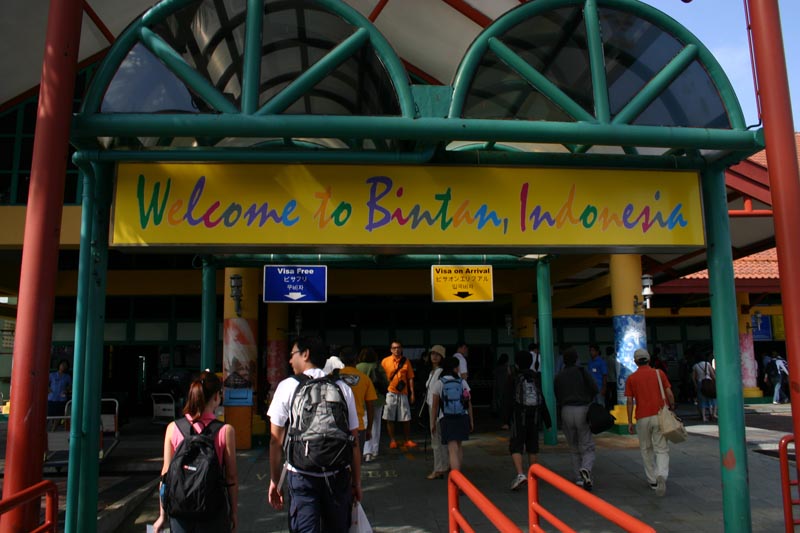
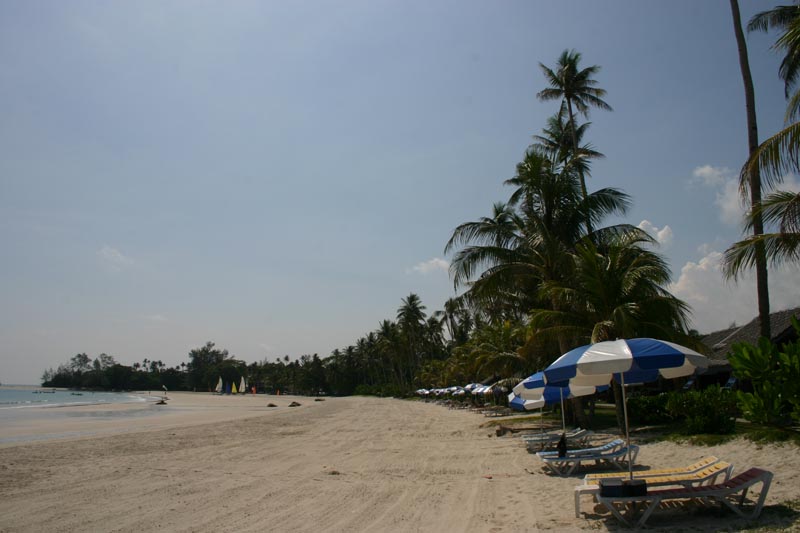
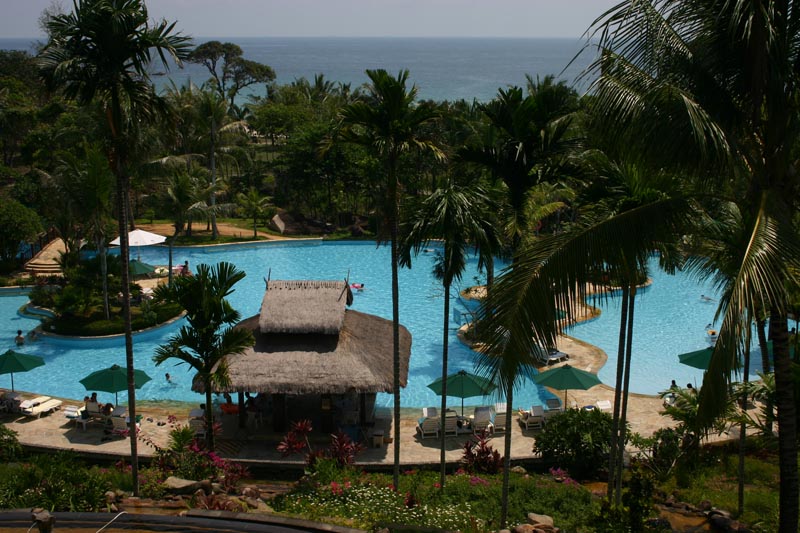
Tourism in Indonesia


IMG_0388.JPG (100804 bytes)

Tourism in Indonesia is being developed through two main programs, covering tourism and tourism products. There are five supporting programs, namely' control of environmental pollution, education, training and tourism guidance; tourism research and development; tourism infrastructure development; and the supervision and development of arts and culture.

The target for tourism set in Repelita VI is 6.5 million foreign tourists with US$9 billion in foreign exchange. Meanwhile 84.2 million domestic tourists are expected to spend nine (9) trillion rupiahs. Through various activities, tourism is expected to generate 900.000 new job opportunities.


IMG_0432.JPG (73968 bytes)

DOMESTIC TOURISM PROMOTION

Tourist objects and tourist attractions are being introduced to the Indonesian people to promote domestic tourism. Group tourist awareness (Pokdarwis) has been established as moving spirit for tourist development such as the improvement of tourist attractions to socialize the Seven Charms Program (Sapta Pesona) consisting of safety, cleanliness, orderliness, comfort, beauty, hospitality, and enchanting memories. Until 2006, there were 921 Pokdarwis throughout Indonesia, or an increase of 71.5% since 2003/2004. To encourage domestic tourism, in 2007 the Government started to develop tours for senior citizens.

The Tourist Awareness Campaign every year adopted different themes in accordance with the national development rhythm and dynamics. In 2005, the theme was The Year of Cooperatives and Telecommunication and in 2006 theme was: The Year of Art and Culture.

Several national tourist events have been held throughout Indonesia. In 2006 the events included Toba Lake Festival in North Sumatra; The Indonesian Archipelago Palace Festival in West Java; Borobudur Festival in Central Java; Bromo Festival in East Java; The Balibo Art Festival in East Timor; The Bidar Kapuas Festival in West Kalimantan; Sea Park Festival in Maluku; and the Lembah Baliem Arts and Culture Festival in Irian Jaya.

Despite the current economic crisis which has hit Indonesia since July 2006, the number of domestic tourists increased steadily. In fiscal year 2006 the number of domestic tourists was 120 million persons who spent 14 trillion rupiahs.


OVERSEAS TOURIST PROMOTION

Tourist promotion campaigns have been staged through Indonesia's Seven Tourism Promotion Centers (P3I) abroad, namely in Frankfurt, Los Angeles, Tokyo, Singapore, Sydney, London and Taipei. Since 2006 Indonesia Tourism Promotion Agency (BPPI) developed new markets and improved promotion programs.

BPPI promotion efforts both at home and abroad was financed by 20% of the development tax revenue in ten tourist destinations, namely: North Sumatra, the Jakarta, West Java, Central Java, the Yogyakarta, East Java, Bali, North Sulawesi, and South Sulawesi. However, due the protracted monetary crisis which hit Indonesia the fund collected from the ten tourist destinations was only sufficient for BPPI operational cost until August 2006. To overcome this problem various marketing’s efforts had been conducted in Singapore, Australia, Japan, Taiwan, Germany, America, England, the Netherlands, Austria, and Switzerland.

In fiscal year 2006, an integrated promotion program was designed to increase the efficiency and effectiveness, of marketing by reexamining the role and responsibility of agencies involved in overseas tourism marketing while utilizing all related components including Indonesian delegations abroad as well as students and the foreign media.

Several important tourism events abroad in which Indonesia participated among others were: International Travel Expo, June 2006 Hong Kong; Holiday and Travel Show, June 2006 Sydney; World Travel Market, November 2006 London; Diving Equipment Marketing Association (DEMA), January 2007 Orlando, Florida; and Internationale Tourismus Borse, March 2007 Berlin.

In fiscal year 2007, international tourist activities held in Indonesia, were: Krakatau Festival in Lampung; the Culture Enchantment and Folk Performances Festival in Jakarta; Maleman Sriwedari and Obral Gedhe Solo in Central Java; and International Wind Surfing Competition in West Nusa Tenggara, Bali and South East Sulawesi.

Until fiscal year 2007 conventions on tourism had been held: 845 MICE (Meetings, Incentives, Congress and Exhibitions) events with 140,762 participants. There were 26 companies operating in the convention services business, including the Jakarta Convention Center, Jakarta International Trade Center and Bali International Convention Center.

To promote convention tourism, in 2007 Indonesia participated in various events such as convention and exhibition (CONVEX) in London, European Incentive Business and Travel Meeting (EIBTM) in Geneva, and Incentive Travel and Meeting Executive Shows (ITME) in Chicago. In addition, some international conferences had also been held in Indonesia such as the International Conference on Culture Tourism (Batik Conference) in Yogyakarta; The Asia Art Fair and Jewels, in Jakarta; and Parmata Gem Related Tourism Conference and Exhibition, in Banjarmasin.

During three years of Repelita VI the country's foreign exchange earnings from the tourism sector contributed significantly to balance the budget deficit in goods and services.

However, due to the current monetary crisis, natural disasters and security disturbances in many regions, the total number of foreign tourists in fiscal year 2007 by 6.7% compared to 4,771,244 visitors in the previous year. The decline occurred since July 2006. Between April to July 2006, the number of foreign tourists visiting Indonesia still showed an increase by 3.9% or 1.75 million visitors with US$2,289.4 million in foreign exchange compared to that in the same period of the previous year with 1.69 million visitors and US$2,210.9 million in foreign exchange.

From August 2006 March 2007, the number of foreign tourists visiting Indonesia declined to 3 millions from 3.4 million visitors at the same period in 2007, showing a 11.9% decrease. The country's foreign exchange earnings also decreased from US$4,447.9 million to US$3,924.6 million at the same period in 2006. On the whole, the country's foreign exchange earnings in fiscal year 1997/98 was US$6,241.7 million or a 2.6% decrease compared to that in the previous year.


IMG_0489.JPG (136655 bytes)

DEVELOPMENT OF TOURISM PRODUCTS

In fiscal year 2007, the Main National Tourism Development Plan (RIPP) was completed, as was the main Regional Main Tourism Development Plan for the provinces of Jambi, South Sumatra, South Sulawesi, Palembang, in South Sumatra; Kaliurang, Merapi and Merbabu in Central Java; Pasir Putih in East Java; Bukari in South East Sulawesi; the western part of West Java; Ratu boko in Sleman and Solo Kasunanan Palace in Central Java.

In facing the globalization era and to improve the regional and sub-regional economic endurance, a closer cooperation program in the tourism sector has also been implemented with several ASEAN countries, such as the Indonesia, Malaysia, Singapore - Growth triangle (IMS-GI), Indonesia, Malaysia, Thailand, Growth-triangle (IMT-GT) and Brunei, Indonesia, Malaysia, the Philippines East ASEAN Growth Area (BIMP-EAGA) on marketing and promotion of tourist package programs, promoting tourist marketing between the member countries, accommodating and mobilizing private investment in the field of tourism.

In fiscal year 2007, the new accommodation capacity was 31,953 rooms. The number of rooms available until 2007 was 185,136 rooms consisting of 81,997 rooms in star-rated hotels and 103,136 rooms in non-star hotels. At the same time, the application of information technology in the field of tourism has also been continued in 47 international hotel chain networks and 16 national hotels chain networks.

The number of travel bureaus in fiscal year 2007 also increased to 2,631 with 721 tour leaders reached 721 and 9,365 tour guides.

Saturday, April 14, 2007

Meramal Nasib di Klenteng Sam Poo Kong

Tanggal 27-29 Maret kemarin gw dkk, cewe-cewe bertiga doang, sempet jalan-jalan ke Semarang (buat survey tesis ding), yihaa seru banget! :D

Sempet nyoba ramalan ke Klenteng Sam Poo Kong. Karena sang tour guide sudah membelikan dupa, dan tidak ada yang berminat untuk diramal, majulah daku sebagai pengujicoba, lagian gw juga belum pernah nyoba, penasaran, hehe...

Kemudian terjadi dialog seperti ini:

Peramal: "Mau diramal apa Dik?"
Gw : (Bingung) "Hmm... apa yah, saya nyoba-nyoba aja sih Pak..."
Peramal: (terdiam dengan bingung -juga-) "Wah Dik, biasanya kalo mau diramal, harusnya diniatin dulu dari rumah maunya nanya apa..."
Gw: (meringis bingung -lagi-) "Hmmm, apa ya Pak, saya jadi bingung juga nih... Apa aja deh Pak. Hehe..."
Peramal: (terdiam seperti berpikir) "Mau nanya jodoh, karir, atau kuliah? Adik ini masih kuliah? Sudah menikah?"
Gw: "Oia Pak, masih kuliah... Belum menikah."
Peramal: (mengangguk-angguk dengan pasrah) "Yah baiklah saya coba..."
Gw: ("maapp, abisnya emang bingung mo nanya apa???")

Dan dimulailah ritualnya...

Seperti ini nih, kalo ngga salah inget:
- Bakar dupa
- Berdoa
- (Mengambil semacam tempat sumpit yang di dalamnya ada sumpit-sumpit bernomor), mengasapinya dengan asap dupa
- Berdoa
- Kocok-kocok tempat sumpit tadi sampe ada sumpit yang jatuh
- Ambil dua buah batu
- Ketok-ketok batu yang tadi, lempar batu-batu itu ke lantai, diamati, dan sumpit yang jatuh tadi dilihat nomornya
- Buka lemari untuk mencari kertas bernomor sesuai dengan nomor sumpit,
- dan TA-DA! Ramalan untukku fresh from the oven! :D

(Klik gambar untuk memperbesar gambar)
Sam_poo_kong_26_small
Sam_poo_kong_26smallHmmm Semarang walaupun panas, tapi masih enak kok buat jalan-jalan (pake kaki maksudnya), soalnya lebih berangin dibandingin Jakarta.

Tips: Kalo jalan-jalan ke Kota Lama & Pecinan, atau zona-zona historis lainnya di Semarang (atau kota lainnya), lebih baik jalan kaki. Biar lebih kerasa soul-nya.

Thanks for Didot yang udah mo nganter seharian, dan makasih juga buat Dita & Ervin yang udah mo nemenin gw. :)

Kapan-kapan maen ke sana lagi ahh...

 
Design by Free WordPress Themes | Bloggerized by Lasantha - Premium Blogger Themes | Best WordPress Web Hosting